How Better Product Information Helps Customers Make Better Buying Decisions: A Furniture Lovers Case Study
Most ecommerce advice treats product descriptions as a copywriting exercise. For considered purchases, especially furniture, the real job of product information is to remove uncertainty.
By Idris Olaide · Founder of SeedSproutPublished 2 October 202614 min read
Case study: how Furniture Lovers turns product information into decision support.
A product description has a bigger job than most retailers give it
When people talk about ecommerce product descriptions, the conversation normally turns to copywriting: use benefits instead of features, tell a story, add keywords and make the product sound desirable.
All of those things can have a place. But they miss what I think is the most important job of product information: helping the customer make a decision.
A customer considering a sofa is not only asking whether they like it. They need to know whether it will fit, how many people it seats, whether the corner is on the correct side, what it is made from, how it functions, whether it is in stock and whether it can get into the property.
Those are buying-decision questions. If the page does not answer them, the customer has to search elsewhere, contact the retailer, make an assumption or decide not to take the risk.
That is why I have become increasingly interested in the product-information work my team and I have been doing with Furniture Lovers. The interesting part is not writing longer descriptions. It is making the information more useful.
Research backs up the importance of detailed product information
Baymard Institute’s ecommerce usability research has repeatedly found that product pages are central to purchase decisions and that missing information can cause shoppers to abandon otherwise suitable products.
49%
identified written dimensions as essential product-page content for confidence that an item will fit.
42%
identified dimension images as essential for the same decision.
Source: Baymard Institute’s 2026 furniture and home-decor quantitative UX research. These are industry research findings, not Furniture Lovers results.
When someone is buying a large corner sofa, a poor decision can mean a very large object arriving at a home where it does not work. The more consequential the purchase, the more useful product information becomes.
Why Furniture Lovers is an interesting case study
At the time of this analysis, Furniture Lovers listed 363 pieces across its furniture range. A catalogue of that size creates a discovery challenge. The answer cannot simply be a more enthusiastic paragraph for every sofa.
The useful question is: what does a customer need to know to decide whether this product belongs on their shortlist?
The live site combines descriptive copy with dimensions, seat count, upholstery, mechanism, sleeping area, corner configuration, box count, stock, delivery, variants, guarantees and a direct route into Fit Check.
A product page should not try to make every product look right for every person. It should help the right customer recognise the right product.
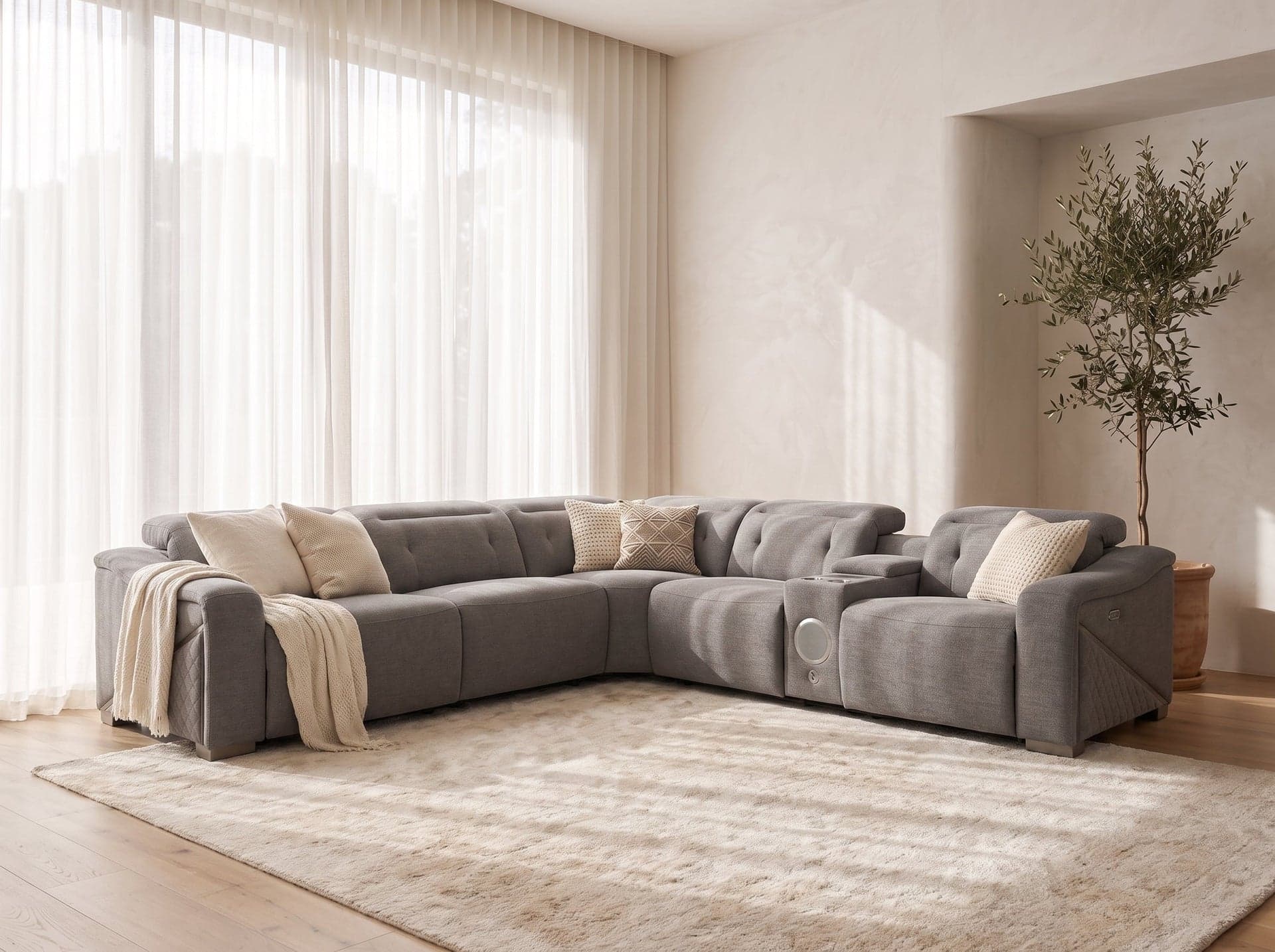
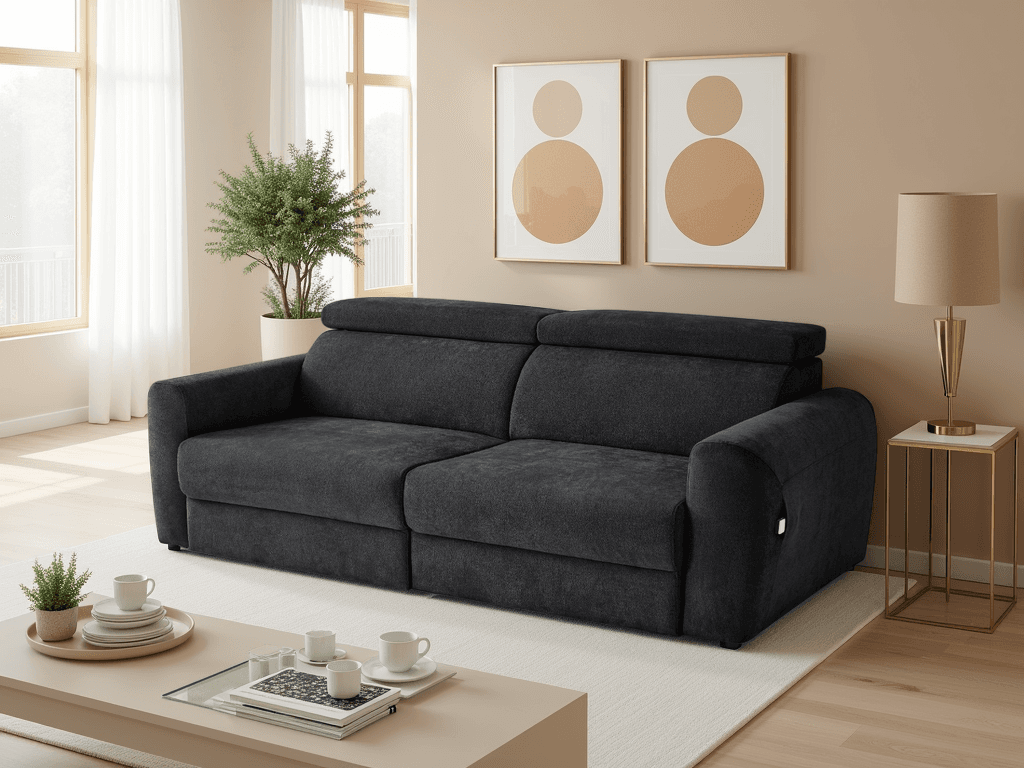
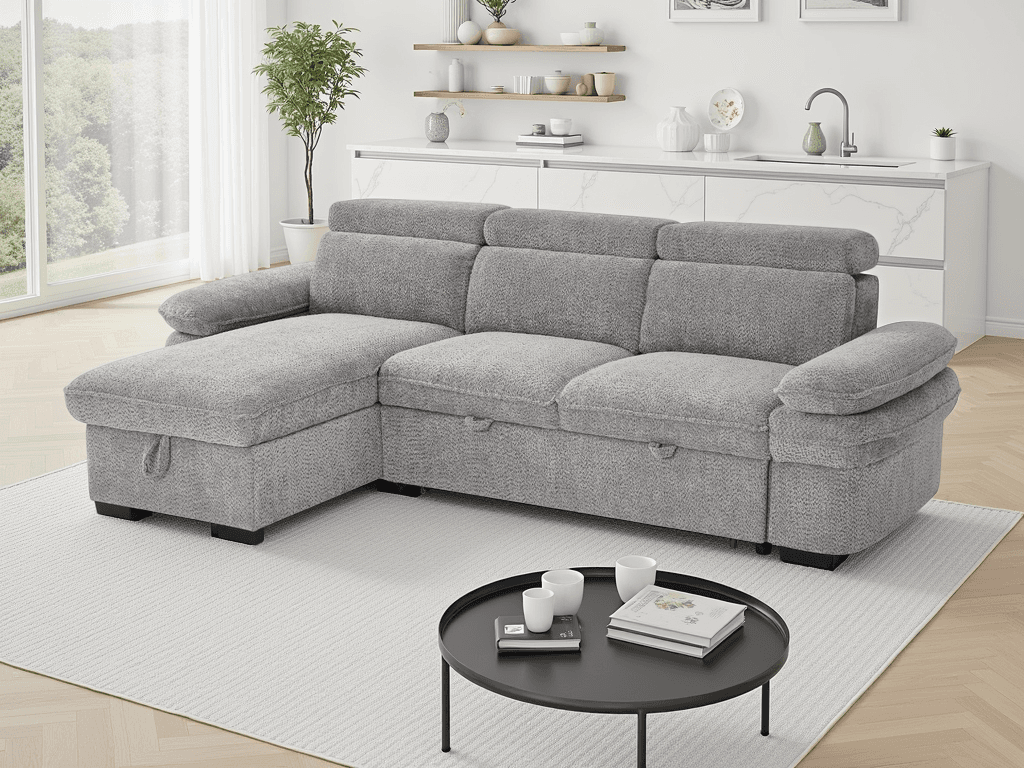
THREE LIVE EXAMPLES
What the customer can decide from each page
Product imagery from Furniture Lovers. Specifications checked 2 October 2026.
The page explains the configuration in plain English: the chaise can be assembled on either side.
What the customer can decide
Compare the 262cm longer side and 166cm return with the room
Account for its 166cm depth and 84–99cm height
Confirm seating for four people
Evaluate the 198 × 123cm sleeping area
Understand the universal corner configuration before ordering
The pattern: turn attributes into answers
The best product content is not organised around how much the retailer wants to say. It is organised around what the customer needs to decide.
01
Is this the right product for me?
Type, capacity, colour, material, configuration, mechanism and features help a shopper assess whether the product matches their brief.
02
Will it work in my home?
Width, depth, height, corner lengths, orientation and extended dimensions turn fit into something the customer can evaluate.
03
What exactly am I paying for?
Specific features explain the difference between products more clearly than vague phrases such as “premium comfort”.
04
What happens if I buy it?
Stock, delivery, payment options, cancellation rights and guarantees address uncertainty around the transaction.
Good product information should be scannable
Furniture Lovers separates description, dimensions and specification. Someone who wants the story can read the description. Someone standing in their living room with a tape measure can go directly to dimensions. Someone checking upholstery, mechanism or box count can scan the specification.
Length is not the goal. Useful information, organised around the decision, is the goal.
A concise description supported by clear specifications can be more valuable than hundreds of words of generic copy.
The information should not stay trapped on the product page
Once product information is structured, it can improve the whole shopping journey. Furniture Lovers uses catalogue attributes in collection filters, helping customers narrow products by price, colour, material, availability, width, configuration and features.
A width measurement therefore has at least two jobs: explain a product on its page and help customers avoid opening unsuitable products in the first place. Good ecommerce content is not only about making a product page better. It is about creating better product discovery.
FROM INFORMATION TO A DECISION TOOL
Furniture Lovers takes the idea further with Fit Check
Instead of asking a customer to browse the entire catalogue and manually compare dimensions, Fit Check asks about the available space first. It compares those measurements with manufacturer dimensions and removes sofas that exceed the space provided.
The way it handles uncertainty matters. If a manufacturer has not supplied a sofa’s width, that sofa is left out rather than guessed. If a requested depth or height is unavailable, the result says that dimension was not checked.
It also separates room fit from delivery access. A sofa may fit against a wall but still be difficult to move through a hallway, staircase or doorway. The tool asks about access without turning incomplete information into an unsupported guarantee.
For a considered physical product, I would answer these questions before worrying about whether the prose sounds clever.
Area
Question to answer
Product identity
What exactly is it?
Key benefit
Why would the right customer want it?
Dimensions
How much physical space does it require?
Configuration
Does orientation, size or layout matter?
Materials
What is it made from?
Functionality
What does it actually do?
Capacity
How many people or items does it accommodate?
Variants
What colours, sizes or versions are available?
Availability
Can the customer buy it now?
Delivery
When, where and how will it arrive?
Returns and guarantee
What protection comes with the purchase?
Unknowns
Is anything important missing or unverified?
Decision tools
Can the data help customers narrow the catalogue?
The fields change by category, but the principle does not: give the customer the information that changes the decision.
What I would improve next
Dimension diagrams
Written measurements are valuable, but customers still need to map numbers to a physical object. Consistent dimension diagrams would make the data easier to interpret visually.
More complete delivery-access data
Overall dimensions answer the room-fit question better than the delivery-route question. Reliable packaged or section measurements could make access guidance more useful.
Stronger product comparison
Structured attributes create the foundation for comparing width, sleeping area, seating, material, configuration, availability and features without repeatedly switching pages.
Move decision information upstream
The best time to tell someone a product is unsuitable is before they spend ten minutes evaluating it. Important attributes should continue moving into filters, collection pages, search and matching.
My main takeaway
Working on Furniture Lovers has changed the way I think about product descriptions. A good product description is part of the decision-making infrastructure of an ecommerce store.
Its job is to reduce uncertainty: to help the customer understand the product, assess suitability, understand what they are paying for and know what happens after the order.
Better product data → clearer product information → easier product discovery → better-informed buying decisions.
That is the part I would copy—not the wording, the number of bullet points or a fixed template, but the principle: do not just describe the product better; help the customer decide better.
Methodology and disclosure
I work with Furniture Lovers and have been involved in its ecommerce, product-content and discovery work. This is a case study from inside the work, not an independent review.
I reviewed the live catalogue, individual product pages and product information on 2 October 2026. Products, prices, stock and specifications can change, so readers should use the live retailer pages for current purchasing information.
This article does not claim that the work caused a particular conversion-rate increase, revenue increase or reduction in returns. Establishing those outcomes would require separate analytics or controlled testing.